

Learning by Doing and the Underestimated Prerequisites for Digital Design Competence
Authors
Files
Abstract
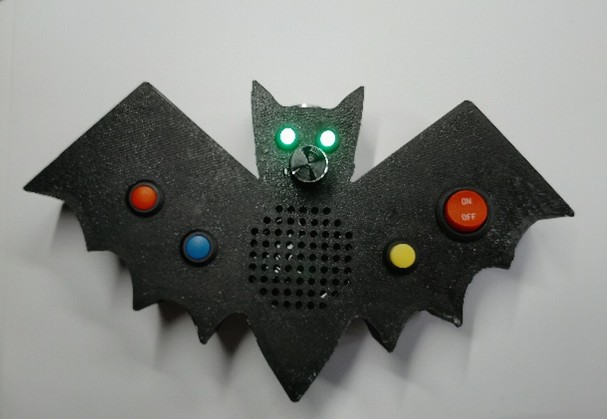
Maker education combines hands-on creation with the testing of artifacts. In the process, tool requirements may become apparent that remain undefined in general descriptions of digital media use. The starting point for this critical narrative review is three accounts of a plenary lecture and reports from the subsequent discussion regarding difficulties with CAD and input devices. This paper relates these experiences to research on making, digital competence, and teacher education. It distinguishes between competence frameworks and conceptual models on the one hand, and empirical studies as well as published findings from project experiences on the other. The analysis specifies requirements for modeling cubes, developing digital learning spaces, and constructing a bat detector. Digital competency frameworks already take design into account; however, their translation into task-specific learning activities and appropriate support remains an open question. For teacher education, the paper establishes a connection between teachers’ own design experience, the identification of technical difficulties, and the planning of subject-specific investigations. Further studies are needed to address the frequency of such difficulties, general gains in competency, and the effectiveness of individual forms of support.
References
1] Binkley M, Erstad O, Herman J, Raizen S, Ripley M, Miller-Ricci M, Rumble M. Defining twenty-first century skills. In: Griffin P, McGaw B, Care E, Hrsg. Assessment and teaching of 21st century skills. Dordrecht: Springer; 2012. S. 17-66. doi:10.1007/978-94-007-2324-5_2
https://doi.org/10.1007/978-94-007-2324-5_2
[2] Pellegrino JW, Hilton ML, Hrsg. Education for life and work: Developing transferable knowledge and skills in the 21st century. Washington, DC: National Academies Press; 2012.
https://doi.org/10.17226/13398
[3] OECD. OECD Future of Education and Skills 2030: OECD Learning Compass 2030. Paris: OECD; 2019. Verfügbar unter: https://www.oecd.org/education/2030-project/
[4] Grant MJ, Booth A. A typology of reviews: An analysis of 14 review types and associated meth-odologies. Health Info Libr J. 2009;26(2):91-108.
https://doi.org/10.1111/j.1471-1842.2009.00848.x
[5] Baethge C, Goldbeck-Wood S, Mertens S. SANRA-a scale for the quality assessment of narrative review articles. Res Integr Peer Rev. 2019;4:5.
https://doi.org/10.1186/s41073-019-0064-8
[6] Papert S. Mindstorms: Children, computers, and powerful ideas. New York: Basic Books; 1980.
[7] Harel I, Papert S, Hrsg. Constructionism. Norwood, NJ: Ablex; 1991.
[8] Blikstein P. Digital fabrication and "making" in education: The democratization of invention. In: Walter-Herrmann J, Büching C, Hrsg. FabLabs: Of machines, makers and inventors. Bielefeld: transcript; 2013. S. 203-22.
https://doi.org/10.1515/transcript.9783839423820.203
[9] Halverson ER, Sheridan K. The maker movement in education. Harv Educ Rev. 2014;84(4):495-504.
https://doi.org/10.17763/haer.84.4.34j1g68140382063
[10] Sheridan K, Halverson ER, Litts B, Brahms L, Jacobs-Priebe L, Owens T. Learning in the making: A comparative case study of three makerspaces. Harv Educ Rev. 2014;84(4):505-31.
https://doi.org/10.17763/haer.84.4.brr34733723j648u
[11] Hsu YC, Baldwin S, Ching YH. Learning through making and maker education. TechTrends. 2017;61:589-94.
https://doi.org/10.1007/s11528-017-0172-6
[12] Martin L. The promise of the maker movement for education. J Pre-Coll Eng Educ Res. 2015;5(1):30-9.
https://doi.org/10.7771/2157-9288.1099
[13] Bevan B. The promise and the promises of making in science education. Stud Sci Educ. 2017;53(1):75-103.
https://doi.org/10.1080/03057267.2016.1275380
[14] Krebs A.-K. "It looks like my die has a favorite number"-maker education for 21st century skills in primary science education. Front Educ.
https://doi.org/10.3389/feduc.2025.1732650
[15] Krebs, A.-K. Förderung von ICT Literacy in der Lehrkräftebildung. Einsatz von Gamification-Elementen im Kontext Artenschutz - In: technik-education (tedu). Fachzeitschrift für Unterrichtspraxis und Unterrichtsforschung im allgemeinbildenden Technikunterricht 5 (2025) 1, S. 11-20.
https://doi.org/10.25656/01:36051
[16] Voogt J, Roblin NP. A comparative analysis of international frameworks for 21st century competences. J Curric Stud. 2012;44(3):299-321.
https://doi.org/10.1080/00220272.2012.668938
[17] Vuorikari R, Kluzer S, Punie Y. DigComp 2.2: The Digital Competence Framework for Citizens. Luxembourg: Publications Office of the European Union; 2022.
https://doi.org/10.2760/115376
[18] Redecker C. European framework for the digital competence of educators: DigCompEdu. Luxembourg: Publications Office of the European Union; 2017.
https://doi.org/10.2760/159770
[19] van Laar E, van Deursen AJAM, van Dijk JAGM, de Haan J. The relation between 21st-century skills and digital skills: A systematic literature review. Comput Human Behav. 2017;72:577-88.
https://doi.org/10.1016/j.chb.2017.03.010
[20] Ng W. Can we teach digital natives digital literacy? Comput Educ. 2012;59(3):1065-78.
https://doi.org/10.1016/j.compedu.2012.04.016
[21] Falloon G. From digital literacy to digital compe-tence: The teacher digital competency framework. Educ Technol Res Dev. 2020;68:2449-72.
Downloads
Details




License
Copyright (c) 2026 Ann-Katrin Krebs

This work is licensed under a Creative Commons Attribution 4.0 International License.